
The most useful master bedroom ideas solve a specific problem: a crowded bedside, awkward storage, a room that feels too dark or a bed wall that needs some character. Choose the change that will make your own room easier to use before copying an entire furniture arrangement.
These bedrooms show different ways to work with color, bedding, lighting and layout. You can borrow one combination for a small refresh or use the planning advice to check a larger redesign.
Plan the layout before choosing the style
Measure the room, windows, door swings and furniture you intend to keep. Record the bed frame’s outside dimensions, not just the mattress size. Mark large new pieces on the floor with tape, then walk from the door to the bed, wardrobe and window.
Open drawers and wardrobe doors during that test. Leave room to make the bed and reach window coverings, and check where both people will put their nightly belongings. If the layout feels tight, remove an optional bench or chair before sacrificing access to everyday storage.
West Elm’s delivery guide covers doorway measurements, turns and obstacles along the delivery route. Check that route as well as the bedroom dimensions before ordering a large frame or dresser.
In this post: 22 ideas
- A neutral bedroom with a comfortable upholstered bed
- A hotel-style bedroom with a useful dressing bench
- A farmhouse bedroom with a wood feature wall
- A minimalist bedroom with storage beside the bed
- A canopy bed with room around the posts
- Burgundy upholstery against a geometric feature wall
- A sage bedroom that works with existing wood furniture
- Dark walls with enough light for everyday use
- A coastal bedroom with pale blue bedding
- A traditional bedroom with a curved upholstered frame
- An industrial bedroom without a full loft renovation
- A bohemian bedroom built around one favorite textile
- A neutral bedroom with planned wall panels
- Botanical wallpaper with simpler bedding
- A teal upholstered bed with restrained plum accents
- A bedside that handles devices without becoming cluttered
- A vintage bedroom using pieces you already own
- A bedroom beneath a sloping ceiling
- A gallery wall with separate reading lights
- Earthy colors with rust bedding and warm wood
- A balanced bedroom with storage for both people
- A personal photo gallery above the bed
1. A neutral bedroom with a comfortable upholstered bed
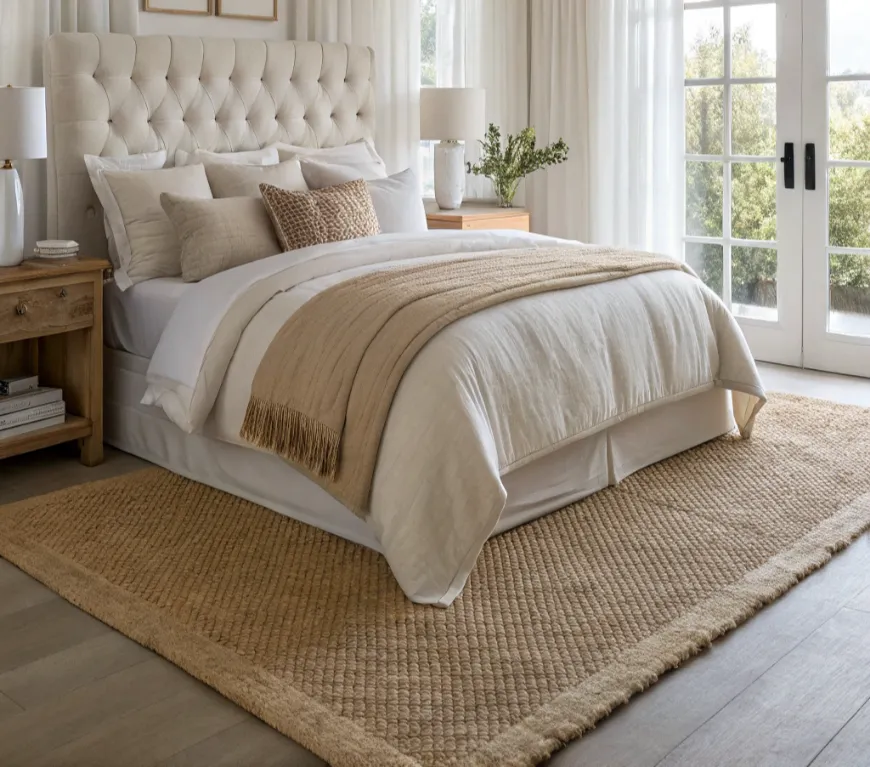
Start with the largest surfaces: warm white walls, a cream upholstered headboard and plain bedding. The wood tables and woven rug keep the pale room from feeling flat. Compare fabric and paint samples together beside your window; a creamy headboard can make a cooler white wall look unexpectedly blue.
Choose bedside tables after measuring the top of your mattress, including its topper. Test whether you can reach a glass or lamp switch comfortably while lying down. An open shelf suits a book you use nightly; a drawer is better for cables and smaller belongings.
A washable throw at the foot adds texture without committing to a patterned duvet. Keep the curtain clear of the table and lamp so you can close it without moving anything.
2. A hotel-style bedroom with a useful dressing bench
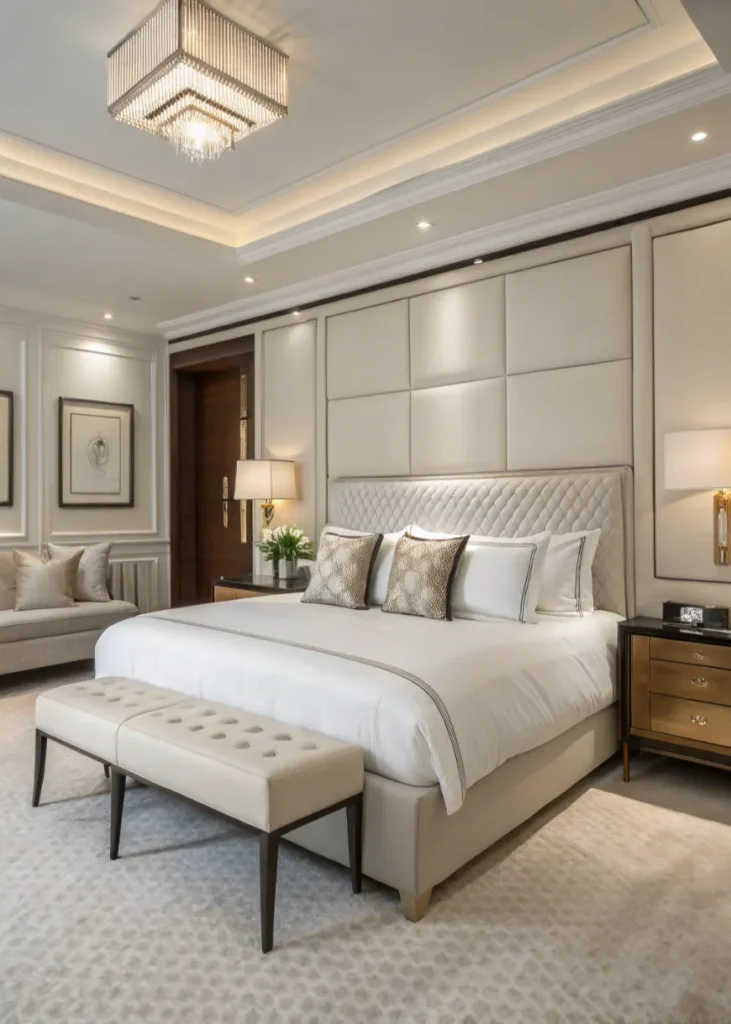
The pale bed, padded bench and paired lamps create a coordinated room without requiring every piece to come from one furniture range. Repeat the upholstery color, then let the bedside cabinets introduce a different finish. Plain bedding makes this easier to maintain than several competing prints.
Before buying the bench, mark its full outline on the floor. Walk around it, open nearby drawers and try the route to the wardrobe. It earns its place if you sit there to put on shoes or fold clothing; if it only collects cushions, leave the floor open.
Choose a seat that is comfortable for dressing, rather than judging its height beside the bed alone. If the bench straddles a rug edge, reposition the rug so all its feet rest on a consistent surface.
3. A farmhouse bedroom with a wood feature wall
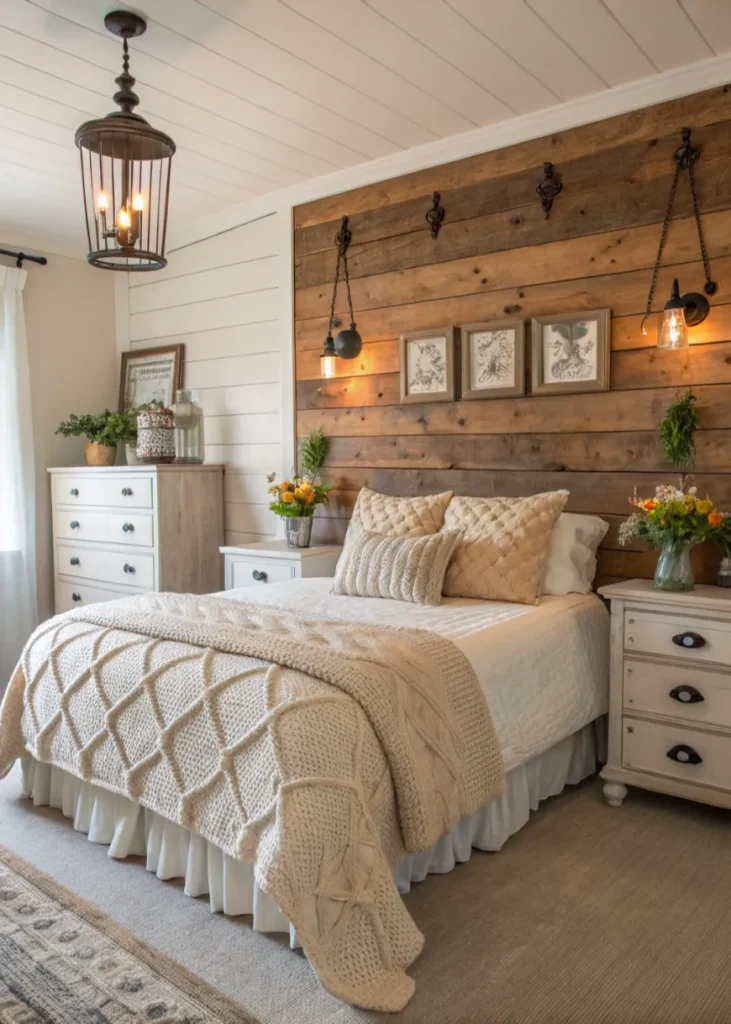
Warm timber, painted drawers and a knitted blanket carry the farmhouse look here. You can borrow the combination with a wood headboard and existing white furniture if full-wall cladding would overwhelm your room. Check wood samples beside the floor so the two finishes feel intentional together.
For a full feature wall, plan the bed, bedside cabinets, pictures and lights before installing the boards. This avoids ending up with a pendant above a pillow instead of a table. Keep the light switches accessible from bed and have fixed electrical work planned by a qualified installer.
The three small pictures can be arranged on the floor first, then centered as a group over the headboard. Use their combined width as the guide. A plain cream duvet underneath the textured throw leaves the timber as the room’s main pattern.
4. A minimalist bedroom with storage beside the bed

The low upholstered bed and tall side shelving work because the middle of the wall remains clear. Before copying the shelves, list what you actually need to store. Books and a few objects suit open shelving; folded clothing, spare chargers and personal items are easier to manage behind doors or in drawers.
Plan shelf spacing around your tallest books, with adjustable shelves where possible. Keep frequently used items within an easy reach rather than making the upper compartments part of your daily routine. Leave a nearby surface for a glass and phone instead of relying on the bed’s upholstered edge.
A low frame changes how easy it is to sit down and stand up. Try that height in person before choosing it for the appearance. The simple palette can work just as well with a taller bed.
5. A canopy bed with room around the posts
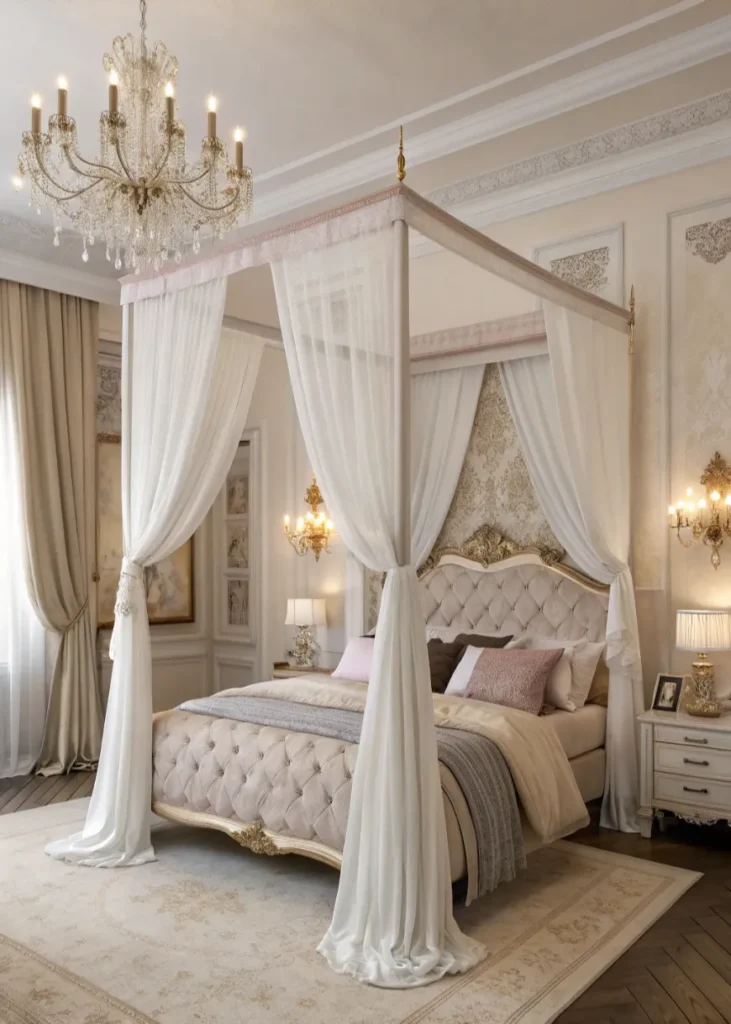
A canopy becomes the main feature before you add any bedding. Measure the frame’s full width and height, including the posts, and check its relationship with the ceiling fixture and window coverings. A bed that fits on the floor may still feel crowded overhead.
Choose an open frame first; add draping only if you want the enclosed look and are willing to wash and arrange it. Follow the bed manufacturer’s directions for attachments. Keep fabric clear of lamps and out of the routes where you step into bed.
The pale drapes and soft bedding in this room belong to the same color family. Use a washable duvet and a smaller accent cushion for contrast rather than adding another large pattern. In a smaller room, leaving the posts undraped keeps the outline visible and reduces fabric around the bedside tables.
6. Burgundy upholstery against a geometric feature wall
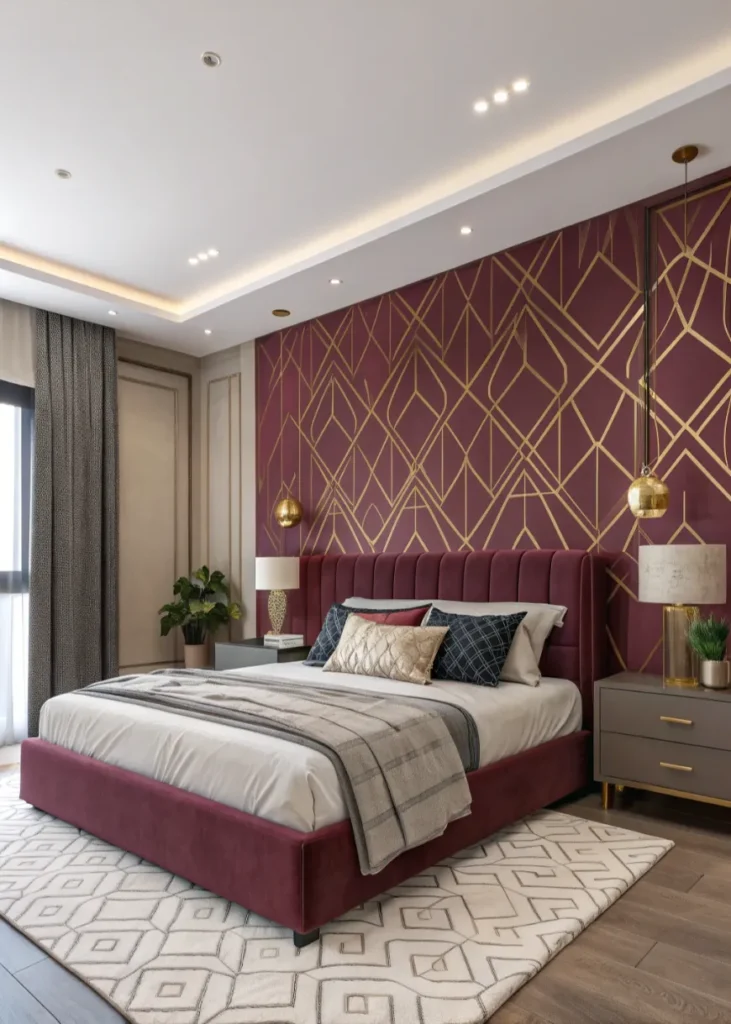
This room combines two strong choices: a burgundy bed and a gold-lined wall. Decide which one matters most to you before buying both. A colored bed can stand against a plain wall; a dramatic wallpaper can sit behind a simpler upholstered frame.
If you want the full combination, bring an upholstery sample to your wallpaper selection. Check both in daylight and with the lamps on, because burgundy can look much browner in some lighting. Use a large wallpaper sample to judge the scale of the gold lines from the doorway.
Keep the duvet mostly plain so the wall and patterned rug have a break between them. Fold a throw within the bed’s outline if you want the burgundy footboard to remain visible. Simple lamp shades also make the busy wall easier to live with.
7. A sage bedroom that works with existing wood furniture
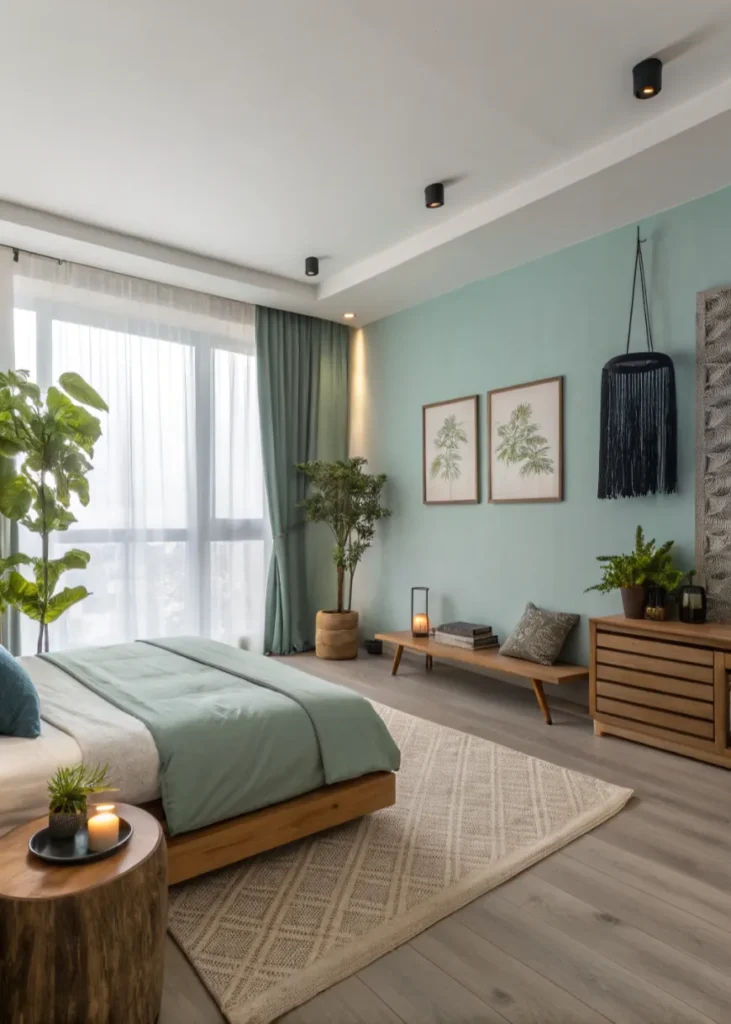
Sage walls and green bedding make a useful starting point when you already own wood furniture. You do not have to replace a working dresser because its finish differs from the bed. Repeat the green in a cushion or throw, and use pale bedding to separate the wood frame from the colored wall.
Paint a movable sample board and place it beside each cabinet, rather than checking the color in one corner. A green that suits the bed may bring out an unwanted orange tone in another wood finish. Our sage green bedroom ideas show more combinations to compare.
Keep a low bench usable if it provides seating, rather than filling it with plants. Place living plants where their light needs are met and use trays to protect wood surfaces from watering spills.
8. Dark walls with enough light for everyday use
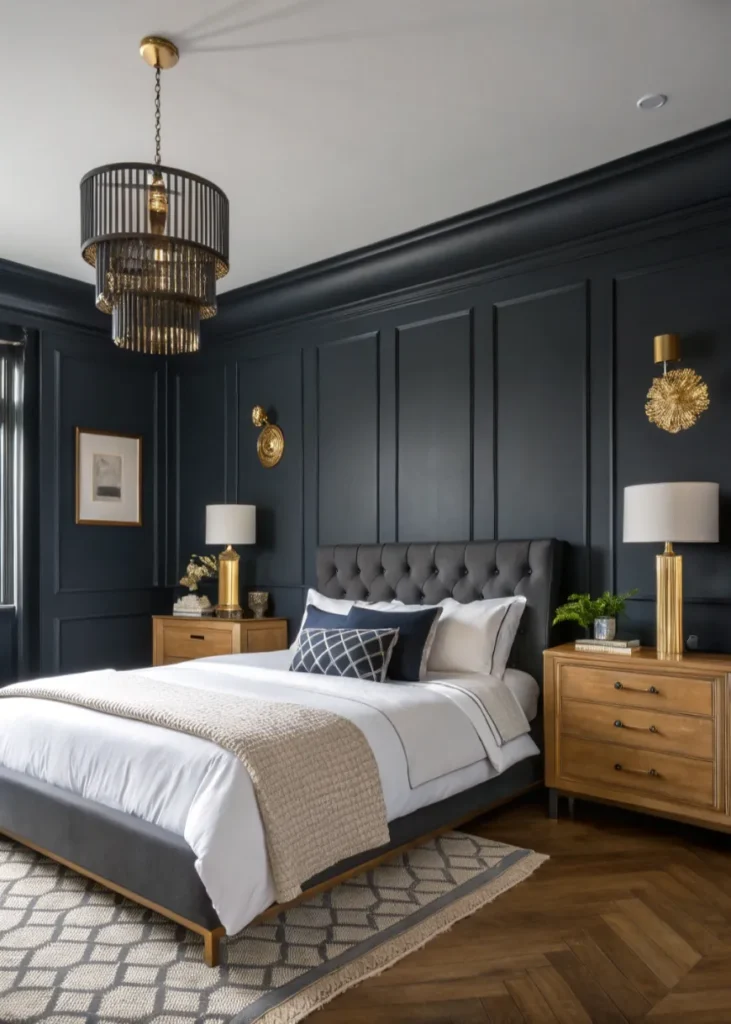
The pale bedding and wood bedside chests make the dark paneled walls easier to work with. Start with those contrasts if you want a moody bedroom: a broad light area on the bed, a visible bedside surface and lamps that can be controlled separately.
Test a dark paint sample on more than one wall. A wall facing the window can look very different from the corner behind the door. Look at it again after sunset with the lights you expect to use. The moody bedroom ideas offer other dark-wall and furniture combinations.
Choose reading lamps for their usable light and reachable switches before matching their bases to the pendant. If the paneled walls already supply enough detail, use a quieter rug than the geometric one shown. Keep the wardrobe area well lit too; a dramatic bed wall should not make dressing awkward.
Plan lighting for reading, dressing and bedtime
Philips Hue separates bedroom lighting into activity areas, including bedside, dressing and reading spaces. Think through those activities before choosing decorative fixtures.
If one person reads while the other goes to sleep, independently controlled bedside lights are especially useful. Check the beam from both pillows, the light inside the wardrobe and whether you can turn the main room light off without getting out of bed.
9. A coastal bedroom with pale blue bedding
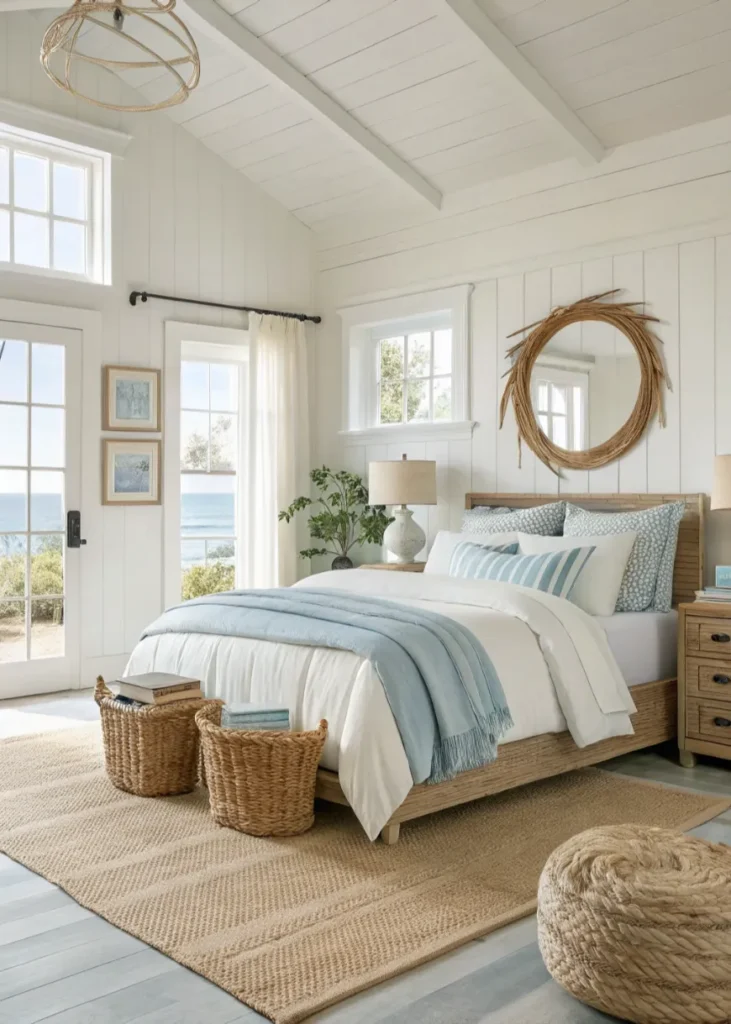
White walls, pale blue textiles and woven pieces suggest a coastal room without needing shell ornaments or nautical prints. Reuse a plain white duvet and add a blue throw first. It is an easy way to test how much color you want before changing curtains or furniture.
The baskets at the foot can hold a spare blanket or decorative cushions at night, but they need a parking spot outside the walking route. If that space is narrow, use one basket beside a dresser instead of copying the pair. Keep any stored textiles clear of window condensation.
A round woven mirror adds texture above the bed. Check its weight and the wall construction before choosing fixings, and follow the mounting instructions. If mounting a mirror there is impractical, a lightweight framed print can provide a similar focal point.
10. A traditional bedroom with a curved upholstered frame
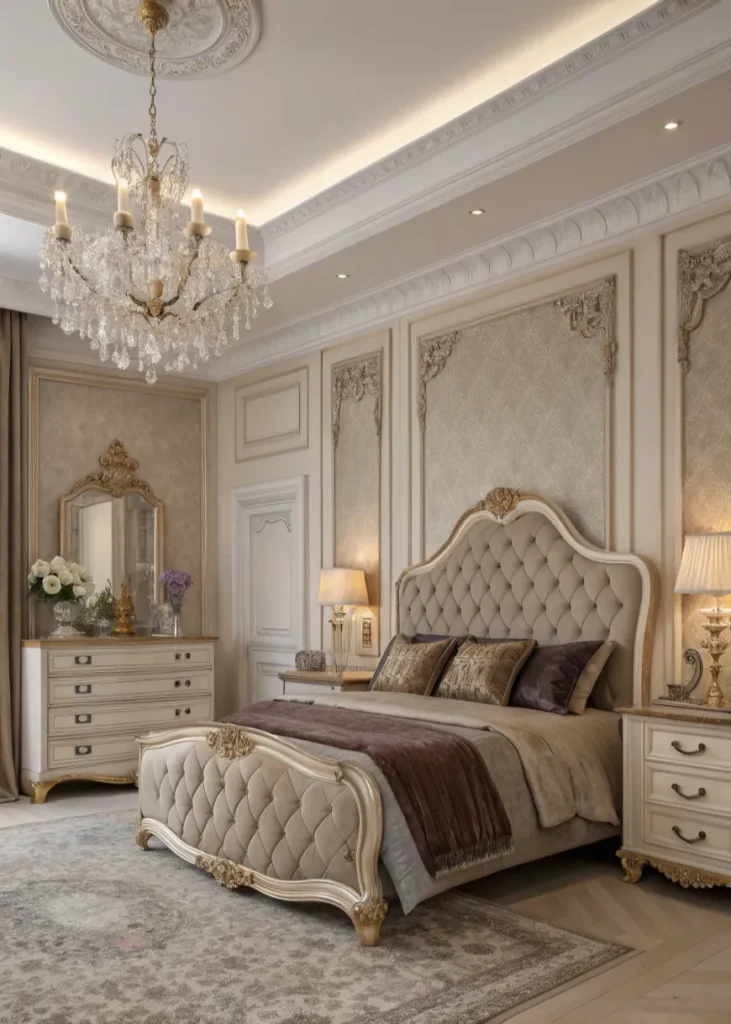
The curved headboard, padded footboard and ornate wall details give this room its traditional character. Measure the whole bed frame rather than shopping by mattress size: projecting feet and a rolled footboard can take up space you expected to use for walking.
Try the door-to-wardrobe route with the frame’s outline marked on the floor. If it is tight, look for a decorative headboard with a simpler foot end. You can keep the traditional style without reproducing every curve.
Choose bedding with a drop that shows some of the frame instead of hiding it. A muted plum throw works with the pale upholstery while adding contrast. When the bed and walls are already detailed, keep the bedside tops useful for lamps and personal items rather than adding a large ornament collection.
11. An industrial bedroom without a full loft renovation

The metal bed, wood drawers and plain bedding are the parts of this room you can reproduce in an ordinary bedroom. Start there before considering brick-effect walls or extra ceiling decoration. The contrast between an open metal frame and solid wood storage already gives the scheme structure.
Check the bed’s support requirements and mattress compatibility before buying. For an older or secondhand frame, inspect its joints and hardware rather than choosing it for the finish alone. A bedside chest can do double duty as clothing storage if its drawers open without catching the bed.
Use a rug to soften the area where you get out of bed. Keep the art and textiles restrained if your room already has textured masonry; with plain painted walls, the same furniture can support a larger picture or warmer bedcover.
 You may also like16+ Stunning Light Color Bedroom Ideas You Will Love
12. A bohemian bedroom built around one favorite textile
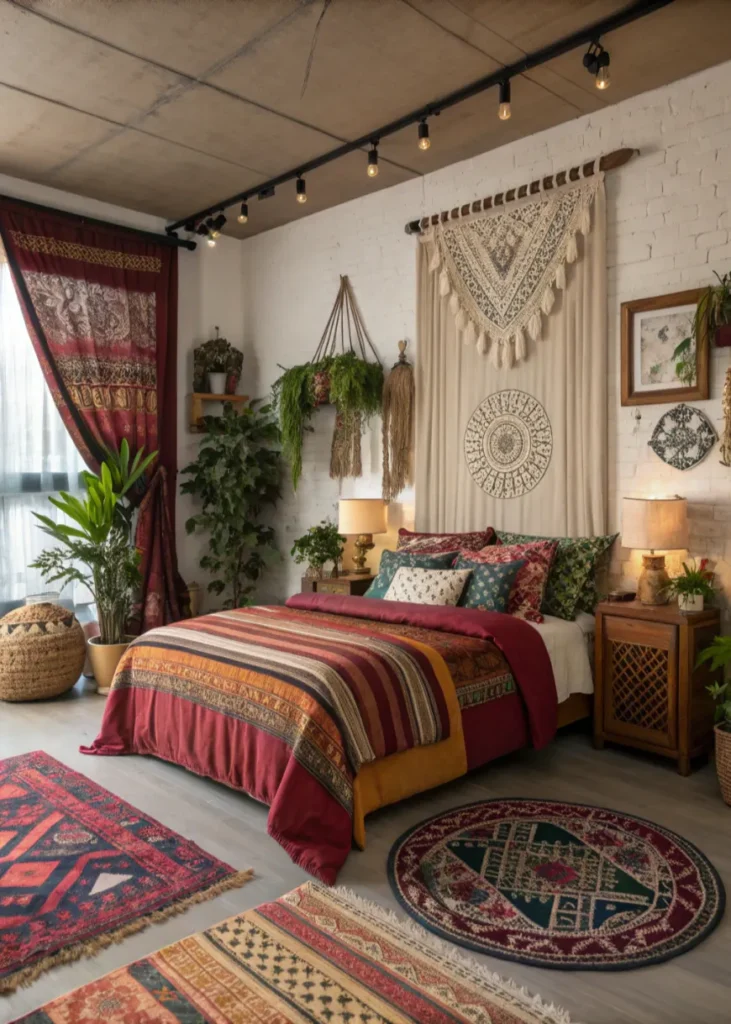
The striped bedcover is a useful starting point for this mix of rugs, plants and wall textiles. Choose one piece you already love, then pull two or three of its colors into the rest of the room. That gives you a way to combine secondhand finds without buying a matching set.
Vary the scale of the patterns. A broad stripe can sit beside a smaller cushion print, while a plain sheet gives the eye somewhere to rest. Lay the textiles together before adding more wall decoration; if every item competes for attention, put one away and reassess.
Several small rugs can be awkward beside a bed. Keep their edges flat and clear of the main route, using suitable rug pads for your floor. One larger rug is a practical alternative when the room has less space than the example.
13. A neutral bedroom with planned wall panels
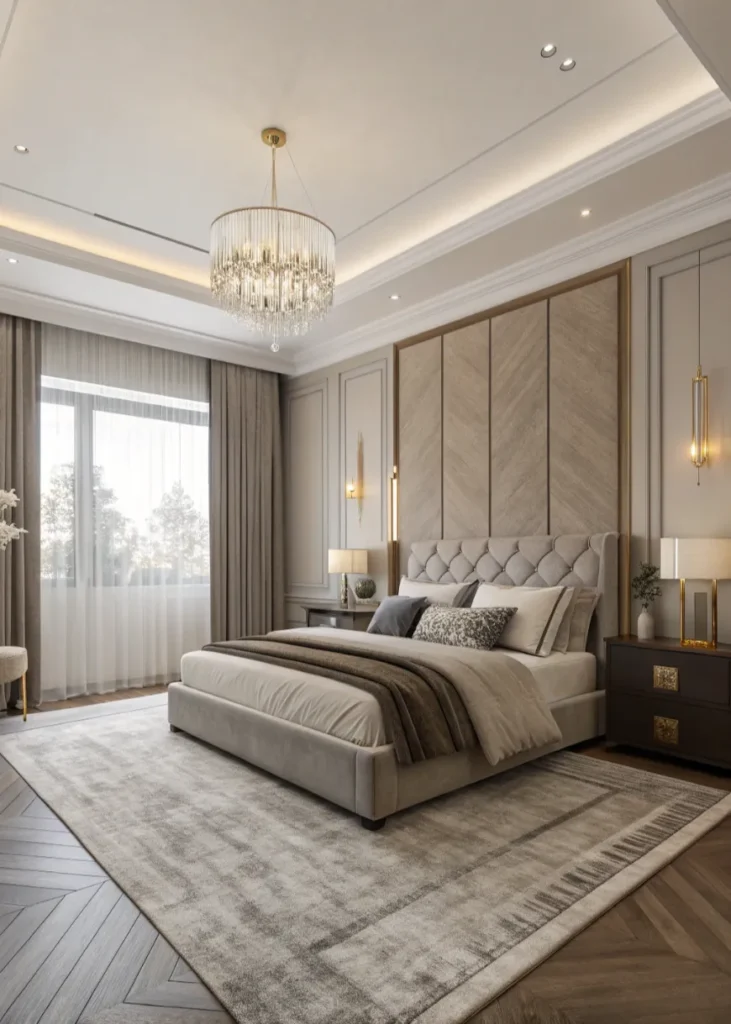
The tall wall panels bring detail to a room that otherwise uses quiet grays and creams. Draw the bed wall to scale before choosing the panel divisions. Include the real widths of the headboard and bedside furniture, plus existing sockets and switches.
Mark the proposed divisions with painter’s tape and look from the doorway and from the bed. Adjust narrow end panels or awkward joints before installation. The furniture should look deliberately placed within the arrangement, rather than leaving a lamp stranded against a panel edge.
Use texture to distinguish similar colors: upholstery, a smooth sheet and a woven throw can each look different without introducing another print. For bedside lighting, check the beam and controls from your actual sitting position. A fixture centered neatly on a panel is not automatically comfortable for reading.
14. Botanical wallpaper with simpler bedding
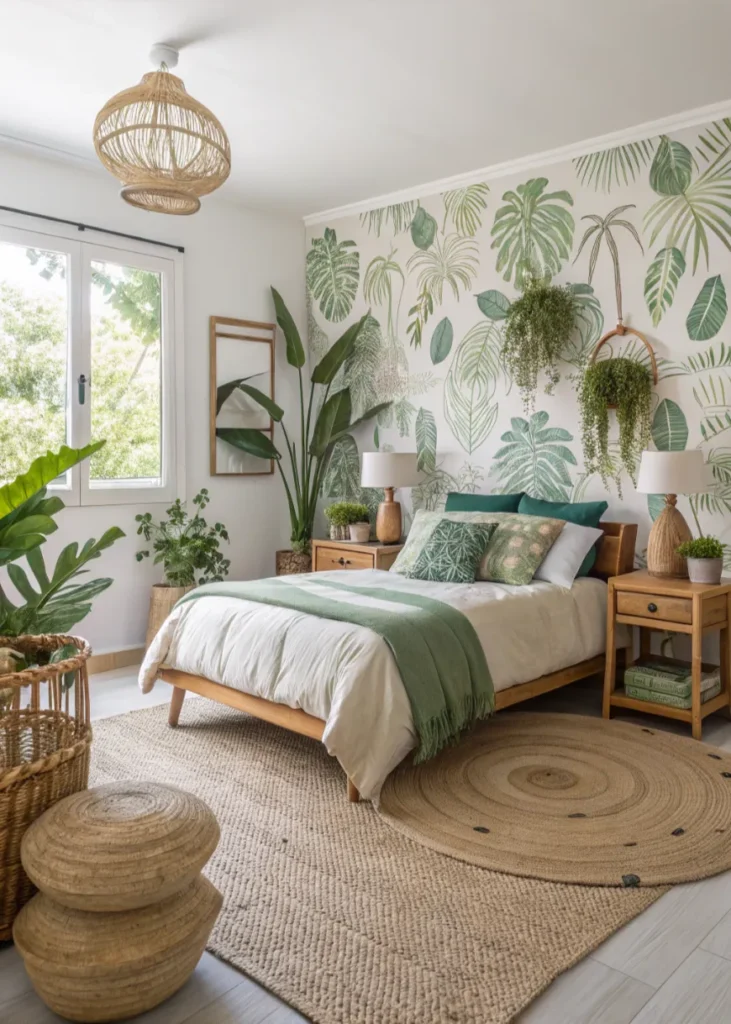
Large leaves make the bed wall the main pattern. Keep the duvet plain and choose a green already present in the wallpaper, then add a lighter sheet or pillowcase to prevent the bed from merging into the background.
Order a sample large enough to see the leaf scale and compare it with your headboard. Before ordering rolls, check the pattern repeat and matching instructions; an all-over botanical design can require more allowance than a plain covering. Plan which part of the repeat will sit above the pillows.
The wood bed and woven pieces add texture without introducing a second large print. You do not need plants in every corner to complete the look. Choose a few that suit the available light, and place them where watering and curtain access remain straightforward.
15. A teal upholstered bed with restrained plum accents
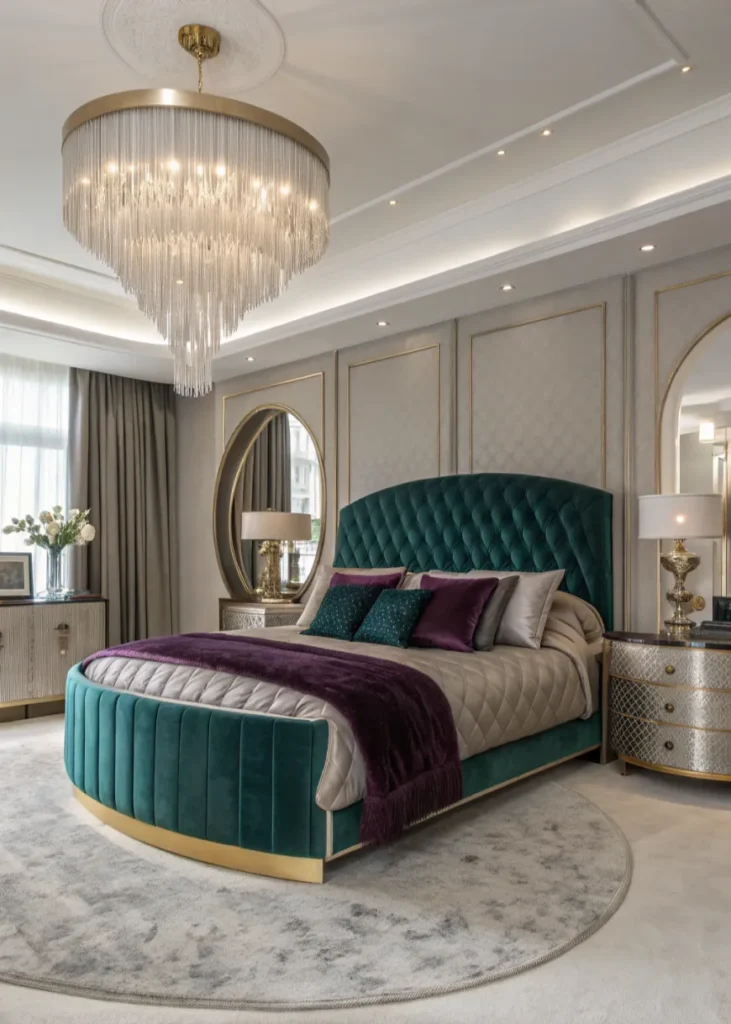
The teal frame is the largest color commitment here. Keep the main bedding pale so the curved headboard and footboard remain visible, then use plum in a throw and a few cushions. You can change those smaller pieces later without replacing the bed.
Ask for an upholstery sample before ordering. View it beside the floor and under your evening lighting, and check the maker’s cleaning guidance. A color you enjoy in a photograph may look much stronger across a full upholstered frame.
The round rug echoes the curved bed, but judge it by where your feet land. Mark its diameter on the floor before buying; a rug mostly hidden under the frame adds little comfort at the sides. If the chandelier is prominent, plain bedside shades keep the rest of the lighting manageable.
16. A bedside that handles devices without becoming cluttered
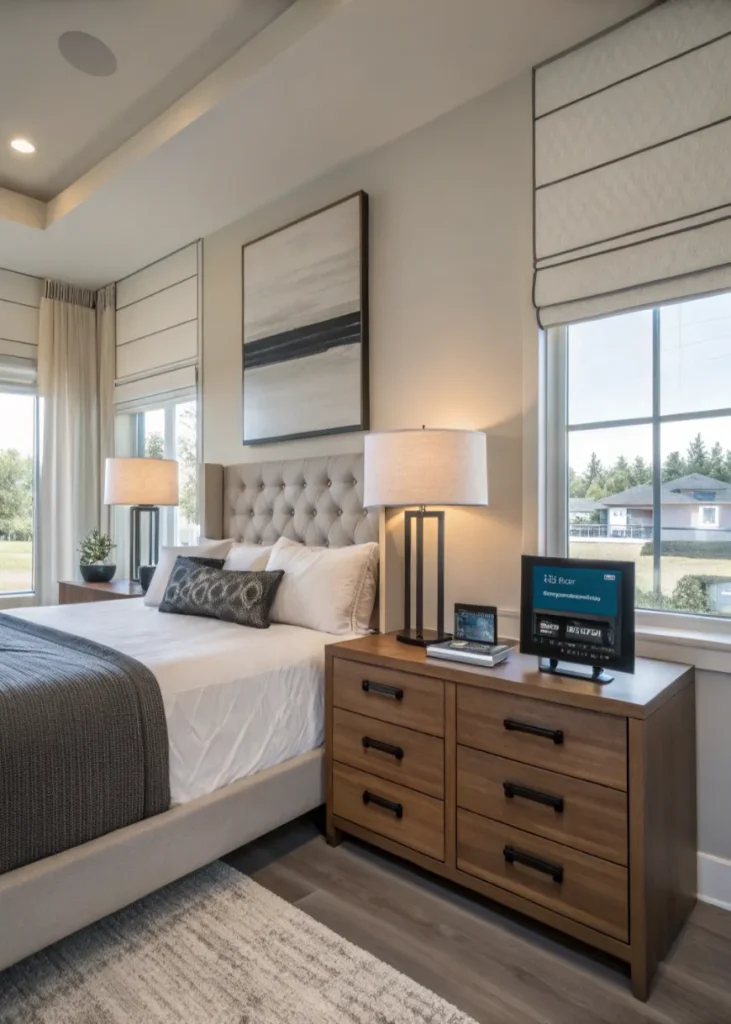
The wide bedside chest gives a lamp, screen and charging devices somewhere to go. Start with the items you actually use at night, then choose a surface large enough to leave room for a book or glass. Technology should fit the routine you have.
Check socket locations before placing the furniture. Route charging leads behind the chest so they do not cross drawer fronts, get pinched by furniture or trail through the walking route. Keep device ventilation clear and follow the manufacturer’s charging instructions.
Test any smart controls from bed, including what happens when a phone is elsewhere or the connection fails. A reachable physical lamp switch is still useful. Screens and indicator lights that bother you at night can face away from the pillow or use the device’s dimming settings.
17. A vintage bedroom using pieces you already own
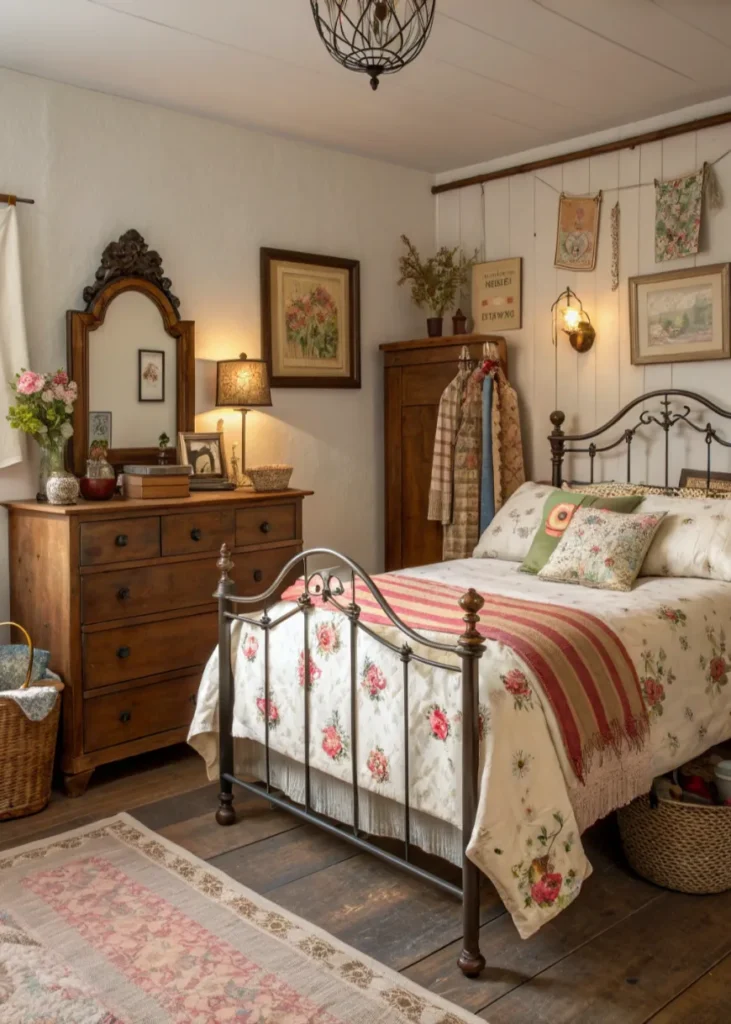
A metal bed, wood dresser and floral quilt can work together without matching finishes. Start with each piece’s job: the dresser needs accessible drawers, the bed needs clear sides and the mirror needs a useful viewing position.
For secondhand furniture, inspect drawer movement, loose joints and the bed’s support fittings before decorating around it. Check that a wardrobe door opens fully in the planned position. A piece that looks right but cannot be used comfortably will quickly become frustrating.
Use the quilt to choose a quieter color for the walls or curtains. If the bedding and artwork both contain several patterns, a folded plain blanket gives the bed a simpler area. Keep the dresser top partly clear so the mirror remains usable and there is space for everyday belongings.
18. A bedroom beneath a sloping ceiling
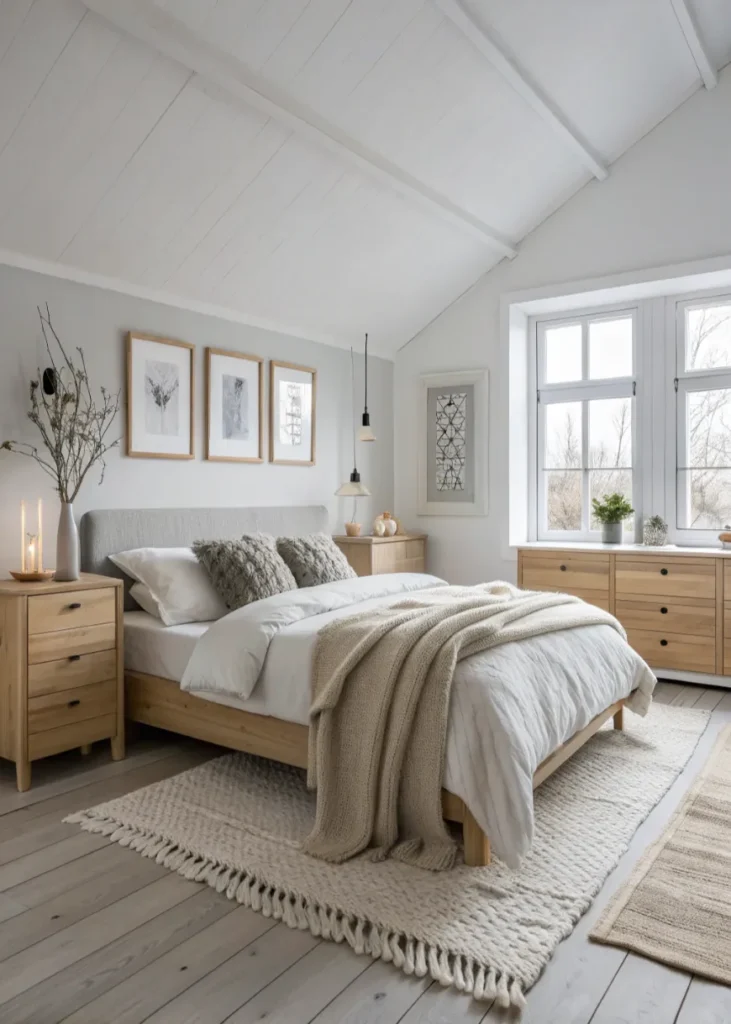
A low bed can fit beneath a slope, but the important test is where you sit up, stand and walk. Measure the ceiling at those positions. An empty floor plan does not show whether your head will meet the roof when you get out of bed.
Put low storage in reduced-height areas only where its drawers can still open. Reserve the taller part of the room for dressing and the route to the door. Mark the bed frame on the floor and try the movement before committing to a size.
The pale timber and soft bedding keep the example visually simple. Choose a bedside lamp that fits under the actual slope, with a switch you can reach. Position the rug where your feet land rather than pushing most of it into an inaccessible corner.
19. A gallery wall with separate reading lights
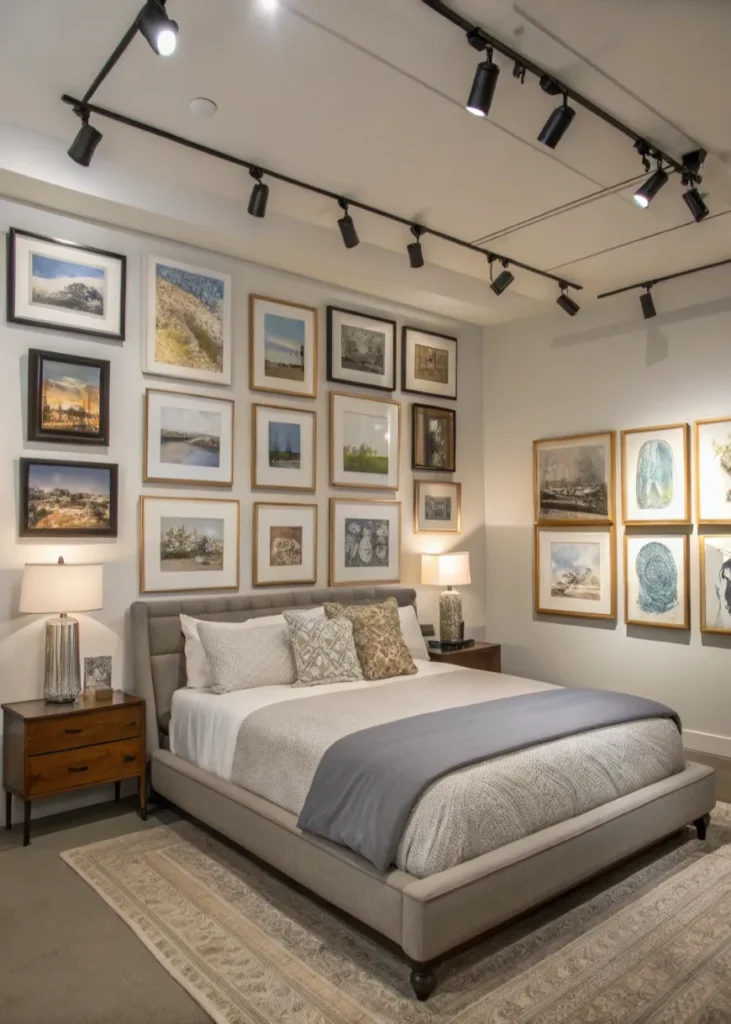
Plan the picture collection on the floor before making holes. Begin with the largest frames, add smaller ones around them and use paper templates to test the overall shape on the wall. Leave space above pillows and beside lamps so the collection does not feel squeezed by daily use.
Track lighting can illuminate the pictures, but it does not replace a comfortable reading lamp. Aim adjustable lights after the framed glass is installed and check reflections while lying on the bed. Put art lighting and bedside lighting on separate controls where possible.
A plain duvet gives the collection a quieter background. You can also limit the gallery to one wall if pictures on both sides feel too busy. Keep the photographs or prints that mean something to you rather than buying filler to complete a rectangle.
20. Earthy colors with rust bedding and warm wood

A rust throw connects the bed with the wood furniture and ceiling beams. Try it on top of existing pale bedding before painting the room in another warm color. This lets you judge the balance with your floor, which may already supply plenty of orange or brown.
Choose a quieter accent for the cushions, such as cream or a muted green, instead of repeating rust on every surface. The woven rug and simple wood pieces add texture without needing a heavily patterned duvet.
If your room has no exposed beams, keep the same textile and furniture combination. Decorative beams are not necessary to make the colors work. Position greenery according to the plants’ light requirements, and leave enough bedside space to set down a book without moving a pot.
21. A balanced bedroom with storage for both people
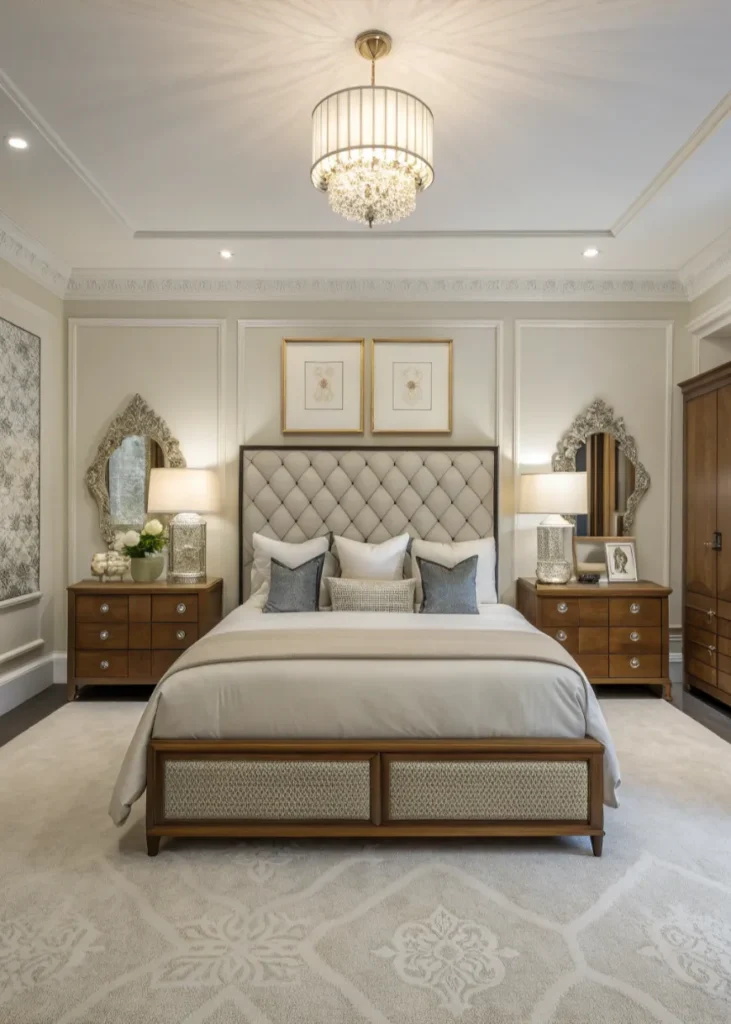
Paired lamps and bedside chests give this room a formal, balanced arrangement. Start by asking what each person needs to keep nearby. One may need drawers for clothing; the other may need a smaller table and space for a chair or door to swing.
Choose similar top heights and lamps of a related size if the storage pieces differ. That keeps the bed wall visually connected without sacrificing useful storage. Check that both people can reach their own light switches and charging points comfortably.
The bench at the foot is optional. Add it only after testing the route around the bed and opening the bedside drawers. The headboard, pictures and mirrors already provide a complete focal area, so the room does not need another piece simply to look finished.
22. A personal photo gallery above the bed

Choose the photographs first, then decide how much wall space the collection needs. Mix close-up portraits with wider scenes so every small frame does not demand the same attention. A few larger images can remain readable from the doorway.
Lay out the arrangement on the floor and photograph it before transferring paper templates to the wall. Leave some room to add pictures later, and choose suitable fixings for each frame and the wall. Frames do not all need the same finish if their spacing and outer arrangement are consistent.
The chest at the foot is useful for spare bedding only if you can open it without moving the bed or blocking the route. Keep its lid clear when you access it regularly. In a smaller room, use under-bed storage and let the gallery remain the personal feature.
Choose the first change your room actually needs
Start with the part of the room that frustrates you most. Clear the dressing route, improve a bedside surface or test a textile color before buying a complete set of furniture. Live with that change for a while so the next purchase answers a real need.
If you need help reducing the number of pieces, the minimalist bedroom ideas offer simpler arrangements. Keep the furniture that earns its space through daily use.

Written by Stephanie Fallis
Mom and homemaker who shares budget friendly DIY projects, decorating tips and gardening ideas for busy families.
More about me → Uncategorized12+ Creative College Dorm Whiteboard Ideas
 Uncategorized16+ Genius Hide Away Bed Ideas for Maximum Small Space Living
 Uncategorized17+ Stunning Couple Romantic Bedroom Ideas You Will Absolutely Love